


To reduce fitness class no-shows, set a clear cancellation cut-off (for example 12 hours before a group class), send a reminder the evening before and about 2 hours before class, make cancelling one tap, use a waitlist that fills freed spots automatically, and apply a fair late-cancel or no-show rule the same way to everyone. Track your no-show rate (no-shows divided by bookings) every month to see what works.
Every studio owner knows the feeling. The class showed as full, three people were on the waitlist, and four members never arrived. The instructor taught a half-empty room and the people who wanted those spots stayed home. No-shows are rarely about bad members. Most of the time people forget, plans change, or cancelling feels like more effort than not turning up. The fix is clear rules, good reminders and making the right thing easy.
What does a no-show cost your studio?
A no-show in a full class costs you the spot twice: once for the member who did not come, and once for the person on the waitlist who could have paid for it. In small classes the cost adds up fast.
As an example, take a reformer class with 8 spots and a drop-in price of RM60. If one spot sits empty in each of 20 full classes a week, that is up to RM1,200 a week of spots you could have sold to someone on the waitlist. Your numbers will differ, but the sum is worth doing once with your own prices.

How do you calculate your no-show rate?
Pull last month's bookings and count three things: total bookings, no-shows (booked, did not cancel, did not check in) and late cancellations (cancelled inside your cut-off).
- No-show rate = no-shows ÷ total bookings.
- Late-cancel rate = late cancellations ÷ total bookings.
- Fill rate = members who attended ÷ total spots offered.
Worked example
| Measure | Calculation | Result |
|---|---|---|
| Bookings in the month | 1,200 | |
| No-shows | 84 ÷ 1,200 | 7.0% |
| Late cancellations | 60 ÷ 1,200 | 5.0% |
| Fill rate | 1,020 attended ÷ 1,400 spots | 72.9% |
Example figures only. Compare your studio against its own past months, not against a number you read online.
Then split the numbers. Look at no-shows by class time, by instructor, by day of the week and by how members pay. Early-morning classes, classes booked many days ahead and unlimited memberships, where missing a class costs the member nothing, are common places to look. Finally, sort members by how many classes they missed. In many studios a small group causes a large share of the no-shows.
What cancellation policy should a fitness studio have?
A good policy has a clear cut-off, a consequence members think is fair, and one written version everyone sees. Here is an example you can adjust:
| Session type | Free cancellation until | Late cancel or no-show |
|---|---|---|
| Group class (pack) | 12 hours before | Class credit is used |
| Group class (unlimited membership) | 12 hours before | Small fee, or a short booking limit after repeated misses |
| Small-group reformer class | 12 to 24 hours before | Class credit is used |
| Private or PT session | 24 hours before | Session is charged in full |
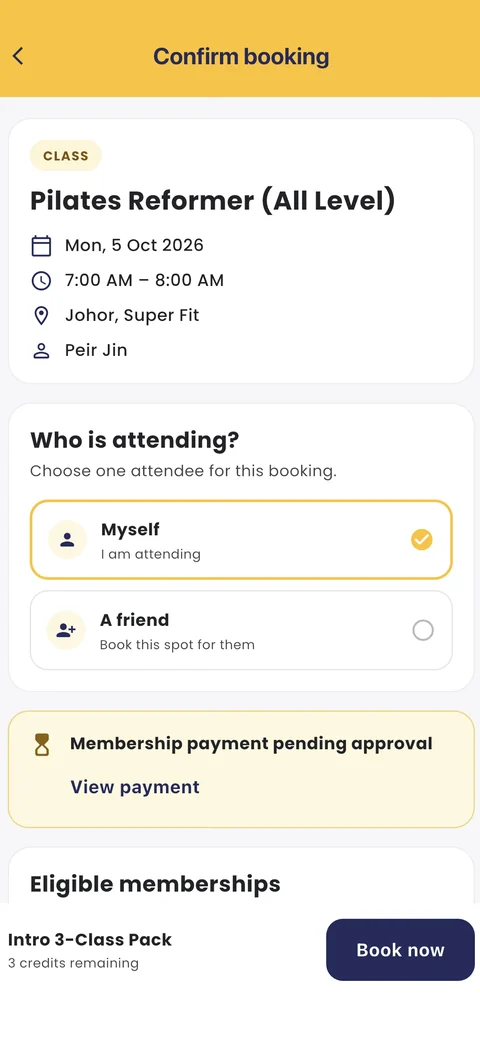
Show the rule where it matters: on the booking screen, in the confirmation message and on your website. If someone only learns about a rule when they are charged for breaking it, they will feel tricked, not reminded.
When should you send class reminders?
Send one reminder the evening before (or 24 hours before for morning classes) and another about 2 hours before class. The first arrives before your cut-off, so members still have time to cancel without a penalty. The second catches people who simply forgot.
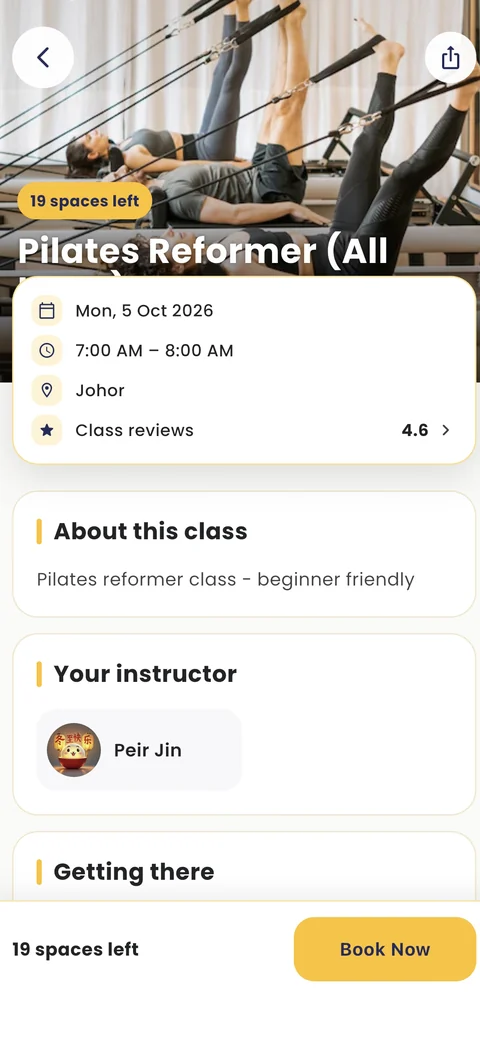
Use the channels your members actually read. For many studios in Malaysia that means app notifications and WhatsApp rather than email. Keep the message short: class name, time, instructor, and a one-tap cancel link.
Why should cancelling be easy?
It sounds backwards, but it works. When cancelling takes one tap, members cancel early and the spot goes back to someone who wants it. When cancelling means messaging the front desk, many people just do not come. Let members cancel in the same place they booked, and confirm the cancellation straight away.
How far ahead should members be able to book?
For most group classes, opening bookings about 7 days ahead works well. The further ahead people book, the more likely their plans change and they forget to cancel. A long booking window also lets keen members grab every popular spot weeks in advance, then drop the ones they do not need at the last minute.
Check this in your own data. Compare the no-show rate for bookings made the same day, 1 to 3 days ahead and more than a week ahead. If bookings made far in advance are missed much more often, shorten the window. You can also set a limit on how many future classes one member can hold at a time, for example 5 on an unlimited membership, so nobody blocks spots they are unlikely to use.
How does a waitlist reduce empty spots?
A waitlist turns a cancellation into a filled spot, but only if it moves fast. An automatic waitlist moves the next person in as soon as someone cancels and tells them right away. Your team does not have to chase anyone. Set a cut-off so people are not moved in too close to class. Our guide on how to manage class waitlists covers the rules in detail.
Should you charge a no-show fee?
A small, consistent consequence usually changes behaviour more than a big one that is rarely applied.
- Class packs: using up the credit is usually enough.
- Unlimited memberships: a modest fee, or a rule such as "3 no-shows in 30 days means you can only book 24 hours ahead for the next week".
- Private sessions: charge in full inside 24 hours, because the instructor's time is already blocked.
- A grace miss: many studios forgive the first miss each month. It keeps the rule fair without making it toothless.
Whatever you choose, apply it the same way to everyone. Exceptions made at the front desk are where rules quietly fall apart, and where software helps most, because it applies the rule without the awkward conversation.
How do you handle members who keep missing class?
Talk to them before you penalise them. Check your attendance report each month and send the members with the most misses a friendly note. Often there is a simple reason, like a class time that no longer suits a new job, and a quick chat turns them back into regulars. Members who stop showing up are also at risk of leaving, which is why no-shows and membership retention are closely linked.
Booking software makes this much easier than a spreadsheet. In Fitnow, reminders, cancellation cut-offs, late-cancel and no-show rules and the waitlist all run on their own, and the booking system shows you who keeps missing class.
Frequently asked questions
How do you calculate a no-show rate for fitness classes?
Divide the number of no-shows by the total number of bookings in the same period. For example, 84 no-shows out of 1,200 bookings is a 7% no-show rate.
What is a fair late cancellation policy for a fitness studio?
Many studios use a 12-hour cut-off for group classes and 24 hours for private sessions. Inside the cut-off, a pack member loses the credit and a membership holder pays a small fee or gets a short booking limit.
When should I send class reminders?
Send one the evening before or 24 hours before, so members can still cancel in time, and a second about 2 hours before class for people who forgot.
Should I charge members for no-shows?
A small, consistent consequence works better than a large one you rarely apply. Using up a pack credit or a modest fee is usually enough, and forgiving the first miss each month keeps it fair.
Do waitlists reduce no-shows?
Waitlists do not stop no-shows, but they fill the spots that cancellations free up. Combined with easy cancelling and a clear cut-off, they keep classes full.
What you get with Fitnow
- Automatic reminders before every class
- Cancellation cut-offs, late-cancel and no-show rules
- Waitlists that move people up on their own
- Attendance reports that show who keeps missing class