


Gyms in Malaysia usually price memberships by type: budget and neighbourhood gyms often charge around RM60 to RM130 a month, 24-hour and mid-range chains about RM120 to RM200, and premium full-service clubs RM185 to RM270 or more. Set your price from your cost per member and local competitors, then offer a ladder of contract lengths, access levels and add-ons.
Membership pricing is not just one number. How you package it, by contract length, access hours and extras, affects who joins, how long they stay and how steady your cash flow is. This guide covers the market, your costs and how to structure your options.
How much is a gym membership in Malaysia?
| Gym type | Typical monthly price (estimate) | What members get |
|---|---|---|
| Budget or neighbourhood gym | RM60 to RM130 | Gym floor, basic facilities, often limited hours |
| 24-hour or mid-range chain | RM120 to RM200 | 24-hour or long hours, app access, multiple branches |
| Premium full-service club | RM185 to RM270+ | Group classes, pools or spas, premium locations |
| Boutique class studio | RM40 to RM90 per class | Usually sold as packs rather than monthly |
These ranges are typical estimates based on public price lists and consumer guides. Chains run frequent promotions, prices differ by branch and city, and all of them change over time. Check what gyms within ten minutes of your location charge today.
Start with your cost per member
Your floor price is your monthly running costs divided by the number of members you can realistically reach. If your gym costs RM45,000 a month to run and you expect 350 members in your first year, each member needs to pay about RM129 a month on average just to break even. Our guide to the cost of opening a gym in Malaysia shows how to build that monthly cost.
If your floor price is above what local competitors charge, you need either a clear reason members will pay more (better equipment, coaching, classes, location) or extra income from personal training, classes and retail.
How should you structure gym memberships?
Build your options from four building blocks. Keep the total number of options small, ideally five or six, so prospects can choose quickly at the front desk.
- Commitment: month to month with no lock-in, a 6-month term, or a 12-month term. Longer terms get a lower monthly price in return for steady income.
- Payment: auto-renewing monthly payments, or a full year paid upfront at a discount.
- Access: off-peak only, peak and off-peak, single branch or all branches, and 24-hour access where you offer it.
- Add-ons: group classes, personal training packages, towel and locker service, and guest passes.
Also decide on special rates for students, seniors, couples, families and corporate groups. Each one should have a clear rule, such as a valid student ID, so the front desk does not have to negotiate.
Sample gym membership price ladder
Here is an example for a 3,000 sq ft neighbourhood gym with an average target of about RM130 per member. It is an example to adapt to your own costs and market.
| Option | Example price | Notes |
|---|---|---|
| Day pass | RM25 | Lets visitors try before they join |
| 10-visit pass | RM200 | Valid 3 months, for irregular users |
| Off-peak monthly (weekdays 10am to 5pm), 12-month term | RM79 a month | Fills quiet hours |
| Monthly, no contract | RM159 a month | Flexibility costs more |
| Monthly, 12-month term | RM129 a month | Your main option |
| Annual, paid upfront | RM1,290 | About two months free |
| Student, 6-month term | RM99 a month | Valid student ID |
| Partner or family add-on | RM110 a month | Each extra person on the same account |
| Joining fee | RM99 | Waived on 12-month and annual plans |
| 10 personal training sessions | RM1,500 | Sold on top of any membership |
Notice how the no-contract option makes the 12-month term look good value, and the annual option rewards members who pay upfront. Price the day pass so that six or seven visits cost about the same as a month's membership.
Joining fees, contracts and cancellation terms
A joining fee helps cover onboarding and filters out people who would leave after a month, but it can also put people off. Many owners use it as a lever: charge it on flexible plans and waive it on longer terms or during a promotion. Whatever you choose, put your terms in writing and explain them before people pay: the minimum term, notice to cancel, what happens to missed payments, and how freezes work.
Offer a freeze for travel, illness or pregnancy instead of forcing a cancellation. A member who pauses for two months is still your member, with a clear date to come back. Our guide on increasing gym membership retention covers this in more detail.
How to price personal training and classes alongside memberships
Personal training and group classes can lift your average revenue per member without needing more floor space. Decide early whether classes are included in membership or sold on top. A common approach is to include a set of classes in a higher membership tier and sell the rest as a class pack.
Sell personal training as packages, such as 10 or 20 sessions, with a lower price per session for bigger packs and an expiry date so sessions are used. Work out the price from what you pay the trainer per session plus a share of your floor and admin costs, then check it against trainers nearby. If trainers are paid per session or on a revenue share, our guide on how to pay fitness instructors explains the options. Keep PT packages separate from memberships in your records, so you can see which one is really making money.
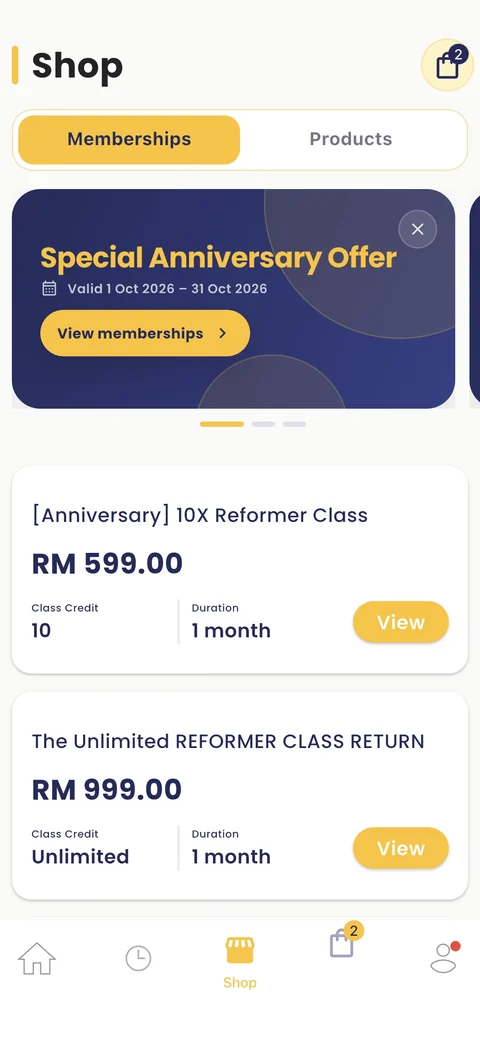
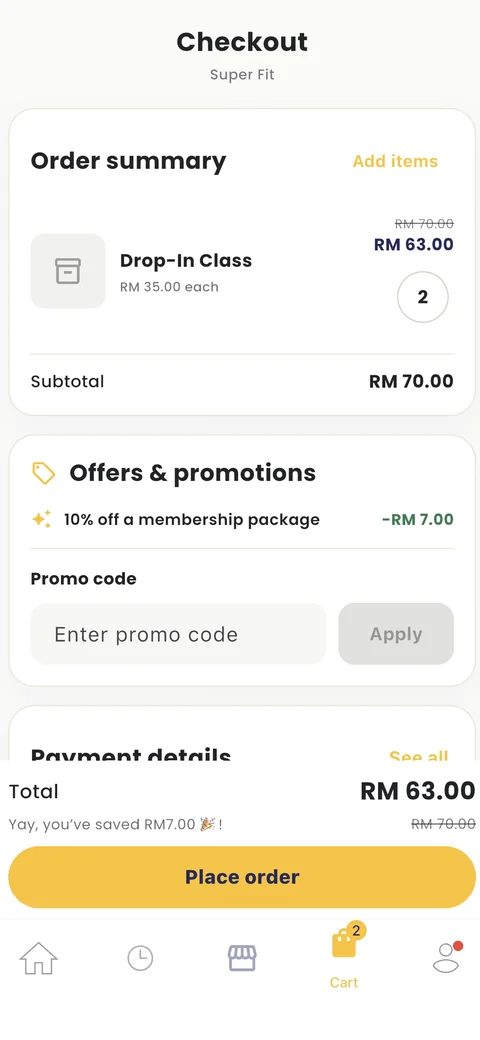
How to run promotions without cheapening your gym
- Give a time limit. A launch or festive promotion that ends on a set date creates urgency.
- Discount the start, not forever. Waive the joining fee or give the first month free rather than cutting the monthly price permanently.
- Use promo codes. A code for each campaign or partner shows which ones actually bring members.
- Reward referrals. Compare the cost of a free month for the referring member with what you pay in ads for each new member.

How to review your membership prices
Every month, look at four numbers: average revenue per member, the mix of plans members choose, how many members renew, and how many cancel. If almost everyone picks the cheapest plan, the gap between options may be too big. If renewals are falling, look at the experience before you cut prices.
When you raise prices, start with new members and keep existing members on their rate until their term ends. Fitnow helps here with auto-renewing memberships, failed-payment retry, freezes and promo codes, plus reports on revenue per member. See membership management in Fitnow.
Finally, check whether service tax applies to what you sell. The rate is 8% for most taxable services. See the MySST service tax FAQ and confirm with your accountant whether your prices need to include it.
Frequently asked questions
How much is a gym membership in Malaysia per month?
As a typical estimate, budget and neighbourhood gyms charge around RM60 to RM130 a month, mid-range and 24-hour chains around RM120 to RM200, and premium clubs RM185 to RM270 or more. Prices vary by branch and promotion.
Should my gym charge a joining fee?
It can help, but use it as a lever. Many gyms charge a joining fee on flexible plans and waive it on 12-month or annual plans, or during promotions.
Is a monthly or annual gym membership better for the gym?
Offer both. Annual memberships paid upfront give you cash and commitment, while auto-renewing monthly memberships give steady income. Price the no-contract monthly option highest so longer terms look good value.
How much should a gym day pass cost?
Price it so that six or seven visits cost about the same as a monthly membership. That keeps the day pass useful for visitors while nudging regulars to join.
Do gym memberships in Malaysia include SST?
It depends on your services and turnover. Service tax is 8% for most taxable services. Check the MySST website and ask your accountant whether you need to register and charge it.
What you get with Fitnow
- Auto-renewing memberships with failed-payment retry
- Freeze instead of cancel, with clear rules
- Promo codes, referrals and payment by card, GrabPay or Touch 'n Go
- Reports on revenue per member, renewals and cancellations